In the UAE, a single cup of gahwa often carries more weight than a fifty page legal contract. Mastering business etiquette middle east isn't just about politeness; it's the primary mechanism for risk management in a high-context culture where 80% of successful deals rely on personal rapport rather than technical data alone. You've likely felt the frustration of a sales cycle that seems to move at a glacial pace despite positive feedback on your project specifications. It's natural to feel unsettled by long silences or ambiguous non-verbal cues during negotiations in Dubai or Abu Dhabi.
We understand that bridging the gap between a Western strategic approach and Middle Eastern execution requires more than just a translated pitch deck. This guide will show you how to transform these cultural hurdles into strategic advantages by establishing "Wasta" and building deep-rooted trust with local stakeholders. We provide a precise checklist for 2026 to help you master the nuances of the GCC market, shorten your sales timelines, and secure your position as a credible, long-term partner in the region's evolving economy.
Key Takeaways
- Understand how the concept of "Wasta" transforms your professional network into a strategic asset for navigating the UAE’s competitive 2026 business landscape.
- Master the hierarchy of formal greetings and updated dress code standards to project professional authority from the boardroom to the Majlis.
- Learn to navigate the fluid dynamics of Majlis-style meetings and why embracing local hospitality is a critical step in establishing long-term trust.
- Discover how the "Saving Face" principle influences high-stakes negotiations and why mastering business etiquette middle east is the key to closing deals during social engagements.
- Utilize our 2026 market entry checklist to audit your sales materials and ensure your local representation aligns with the cultural and strategic expectations of the Emirates.
Beyond Politeness: Why Etiquette is a Strategic Asset in the GCC
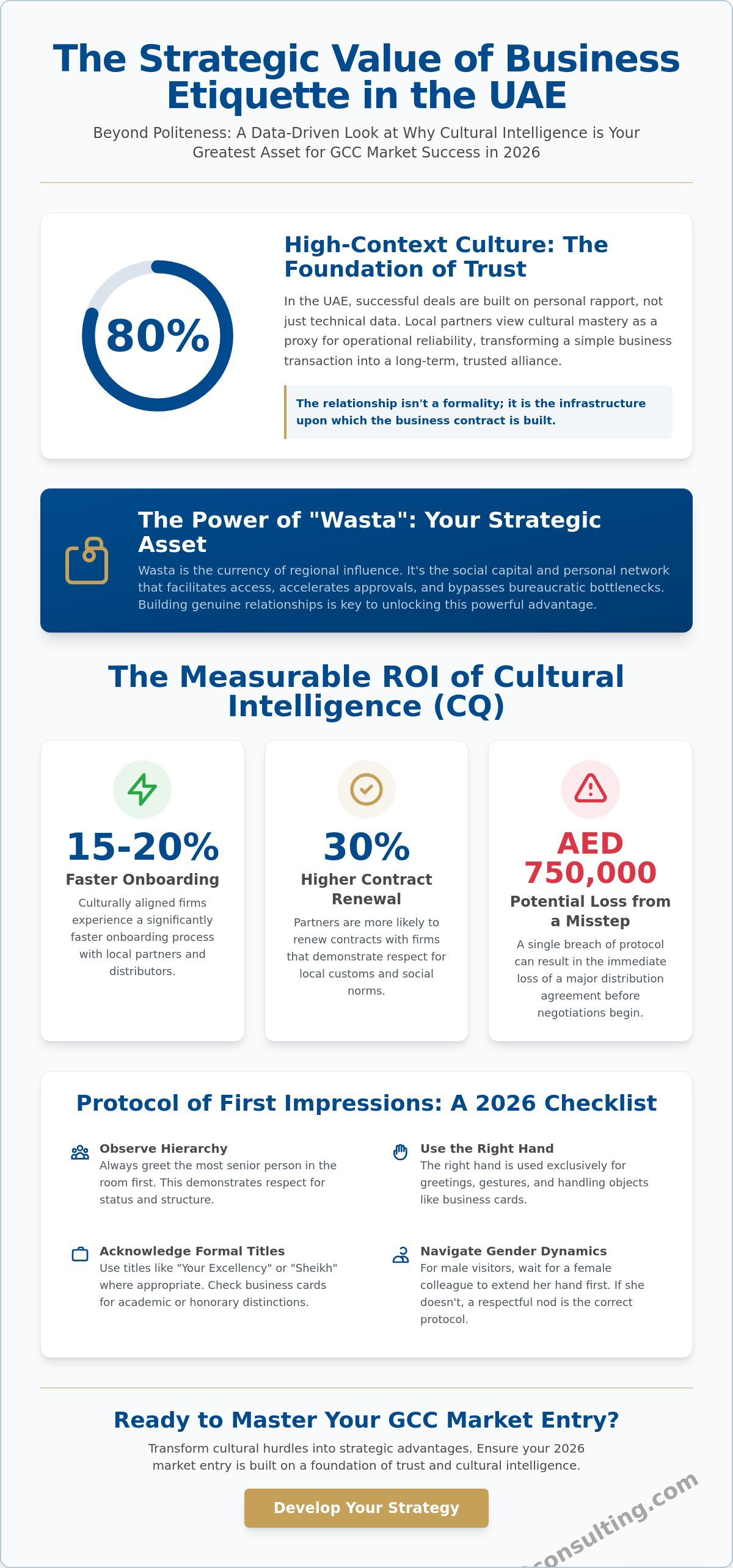
Professional success in the Emirates depends on more than technical specifications or competitive pricing. In the 2026 Gulf business environment, business etiquette middle east serves as a sophisticated risk mitigation tool. Local partners view cultural mastery as a proxy for operational reliability. When a foreign executive demonstrates a deep understanding of regional norms, they signal a commitment to the market that transcends a single transaction. This alignment reduces the perceived risk for local stakeholders, transforming an external vendor into a trusted long-term ally.
The 2026 landscape is defined by a unique tension between traditional values and the rapid digital transformation mandated by "We the UAE 2031." While high-speed execution is now expected, the decision-making process remains rooted in a relationship-first philosophy. Western "task-first" cultures often prioritize the contract over the person, a move that can stall negotiations in the GCC. Bridging this gap requires a shift in perspective: the relationship is the actual infrastructure upon which the business contract is built.
Understanding the High-Context Culture
B2B negotiations in the UAE happen within a high-context framework where what is left unsaid is often as vital as the written word. In this environment, non-verbal cues, silence, and the hierarchy of the room dictate the flow of power. Decisions aren't merely based on data; they're based on the "feel" of the partnership. Wasta is the currency of regional influence. This concept encompasses the social capital and personal networks that facilitate access and accelerate approvals. By 2026, even as AI-driven processes streamline logistics, the human element of Wasta remains the primary driver for bypassing bureaucratic bottlenecks.
The Business Impact of Cultural Intelligence (CQ)
Cultural Intelligence (CQ) isn't an abstract concept; it's a measurable performance driver. A lack of CQ can lead to significant financial losses. For instance, a misunderstood gesture or a breach of protocol during a preliminary Majlis meeting can result in the loss of a potential AED 750,000 distribution agreement before the first slide is even shown. Conversely, high CQ directly influences the efficiency of your operations:
- Onboarding Speed: Culturally aligned firms see a 15% to 20% faster onboarding process with local distributors.
- Crisis Management: Stronger personal ties allow for informal dispute resolution, avoiding costly legal fees.
- Market Retention: Partners are 30% more likely to renew contracts with firms that respect local prayer times and social customs.
Integrating these nuances into your broader gcc market entry strategy ensures that your organization isn't just entering a territory, but is becoming part of the regional ecosystem. This strategic depth is what separates temporary vendors from permanent market leaders.
The Protocol of First Impressions: Greetings and Professional Appearance
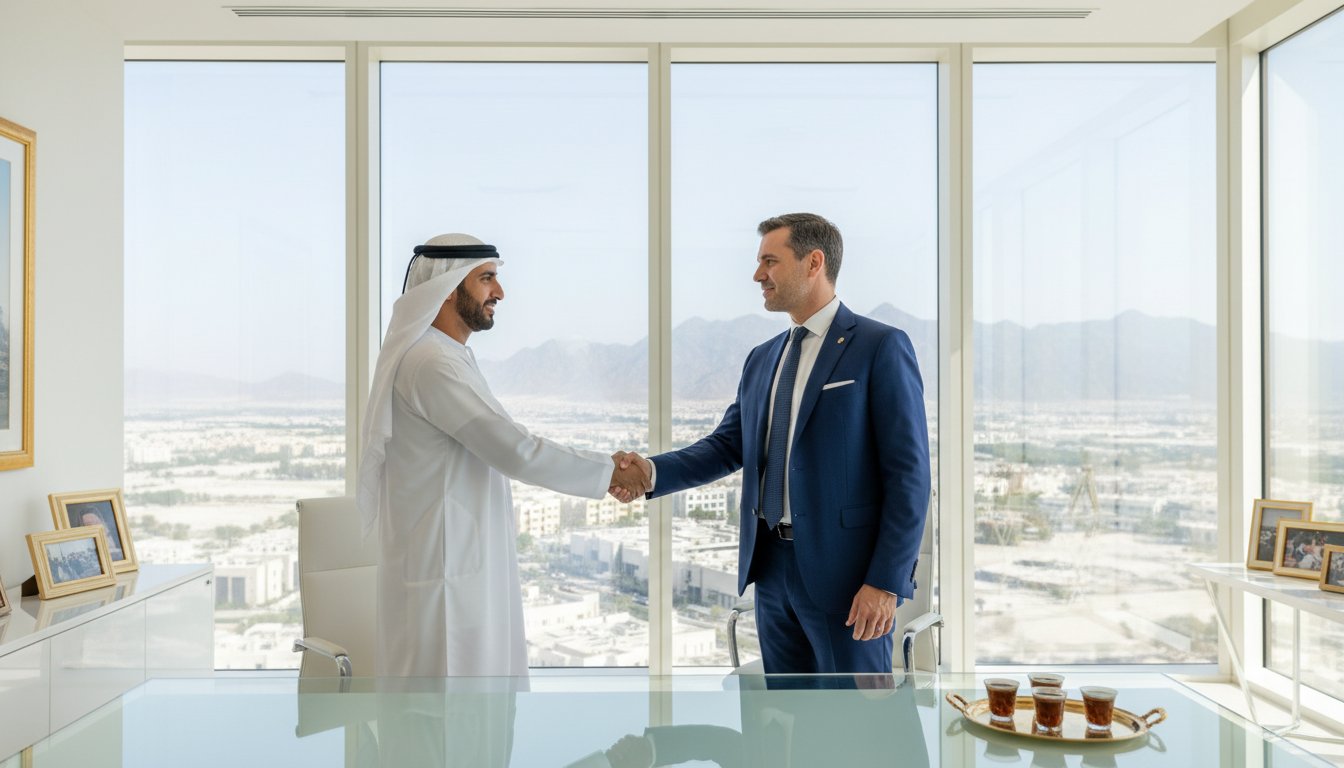
In the UAE, the first sixty seconds of an interaction often determine the success of a multi-million AED contract. Mastering business etiquette middle east starts with the hierarchy of the greeting. You should always greet the most senior person in the room first. Use the traditional "As-salamu alaykum" followed by a firm, yet brief, handshake using only your right hand. While modern offices in Dubai are increasingly globalized, the right hand remains the only acceptable hand for eating, gesturing, and greeting.
Formal titles carry significant weight in the GCC. Address partners as "Your Excellency" or "Sheikh" if they hold those titles. For others, "Mr." or "Ms." followed by their first name is common, but you should always check their business card for specific academic or honorary distinctions. This attention to detail signals that you've done your homework and respect the local hierarchy. It's about showing that you value the person's status as much as the potential deal.
Mastering the Initial Greeting
Gender dynamics in 2026 business meetings require a nuanced approach. While the UAE's workforce is 50% female in many government sectors, the best practice for male visitors remains to wait for a female colleague to offer her hand first. If she doesn't, a respectful nod and placing your right hand over your heart is the appropriate professional response. This gesture communicates respect for personal boundaries without creating an awkward moment. Physical distance is also key; standing too close can be perceived as aggressive, while standing too far might signal a lack of interest.
Visual Authority: Dress Code for the Region
Your attire serves as a silent communicator of your professional standards. For men, a dark, well-tailored suit is the baseline for meetings in DIFC or Abu Dhabi Global Market. In the tech and software hubs like Dubai Internet City, 2026 trends show a shift toward "elevated business casual," where a high-quality blazer paired with chinos is acceptable. However, a tie is still preferred for initial introductions to signify your commitment to the meeting's importance. Women should opt for modest professional attire that covers the shoulders and knees, avoiding overly tight clothing to remain aligned with local norms.
- The Majlis Setting: If invited to a traditional Majlis, choose clothing that allows you to sit comfortably on the floor while maintaining modesty. Ensure your socks are in perfect condition, as shoes are removed at the entrance.
- Cultural Boundaries: Avoid wearing local dress like the Kandura unless you're participating in a specific cultural ceremony. Stick to high-end international business attire to project authenticity.
- Business Cards: The physical exchange remains a vital ritual. Present your card with the right hand, ensuring the Arabic side faces up. Take at least five seconds to study the recipient's card before placing it in a leather holder; never put it in your pocket.
Small talk is the bridge to trust in business etiquette middle east. Focus on the UAE's 2031 Vision or the impressive infrastructure developments in the Northern Emirates. Avoid discussing regional politics or sensitive religious topics. If you're looking to refine your market entry strategy, partnering with an experienced consultant can help you navigate these nuances with precision. Trust is built on these small, disciplined actions that prove you value the relationship over the transaction.
Navigating the Meeting Dynamics: Communication and Hospitality
Success in the UAE often hinges on understanding the Majlis dynamics. While Western corporate models prioritize a rigid agenda, business etiquette middle east practices favor a more fluid, relationship-centric approach. You'll likely find that the first 30 minutes of a meeting are dedicated to building a personal connection rather than reviewing KPIs or project milestones. This isn't wasted time; it's the period where your counterpart assesses your character and reliability.
Managing the concept of "Bukra" (tomorrow) alongside your 2026 corporate deadlines requires a strategic shift in perspective. Local partners often view time as a flexible resource. While a contract might specify a delivery date, the actual execution often depends on the strength of the ongoing relationship. When you hear "Insha’Allah" (God willing), don't interpret it as a lack of commitment. It's a cultural acknowledgment that human plans are subject to higher powers. To stay on track for 2026 goals, build in a 20 percent time buffer for every phase of your implementation plan.
The Flow of a GCC Business Meeting
Meetings in Dubai or Abu Dhabi rarely follow a linear path. You should expect frequent interruptions, including phone calls or third parties entering the room. These aren't signs of disrespect. They indicate that your host is a person of influence who manages multiple priorities simultaneously. Maintaining your composure during these breaks demonstrates the professional "higgadtság" (calmness) that local executives value in a consultant.
- Seating and Seniority: Always wait to be shown to your seat. The most senior person usually sits furthest from the door or in a central position.
- The First Half Hour: Focus on shared values, family (in general terms), and your impressions of the UAE's growth. Avoid diving into technical sales talk until your host signals the transition.
- Active Listening: Pay attention to what isn't said. Silence often indicates a need for more information or a subtle disagreement that won't be voiced directly to avoid causing "loss of face."
Hospitality as a Trust-Building Ritual
Hospitality isn't a courtesy in the UAE; it's a foundational pillar of business etiquette middle east. Declining coffee or tea can be perceived as a rejection of the host’s gesture of friendship. When the Gahwa (Arabic coffee) is served, always accept it with your right hand. This small physical act signals your respect for local traditions and your readiness for a partnership.
The ritual of sharing dates and coffee serves as a transition point. Once the coffee service concludes, it's usually the signal that the social portion of the meeting has ended and the strategic discussion can begin. Remember that the right hand must be used for all social exchanges, including eating, gesturing, and handing over business cards. In a market where a single high-level introduction can lead to a contract worth 500,000 AED or more, mastering these nuances is a high-ROI activity for any consultant or executive.
From Introduction to Agreement: Trust-Building and Negotiations
Trust in the UAE business environment isn't an entry requirement; it's the foundation of the entire agreement. In the United Arab Emirates, the 2024 Edelman Trust Barometer highlights that trust in businesses remains exceptionally high, reflecting a culture where personal credibility precedes corporate capability. Mastering business etiquette middle east requires you to understand that a legal signature is often just the formalization of a pre-existing verbal bond. If your word isn't solid during the tea service, a hundred-page contract won't save the deal.
Negotiation is a social exercise, not a battle of spreadsheets. The most significant breakthroughs often happen away from the boardroom. If a partner invites you to dinner at a high-end venue in Dubai International Financial Centre, expect the conversation to focus on your values and family before the first mention of a 1,000,000 د.إ investment. Rushing this process is a strategic error. It signals that you value the transaction over the individual; a sign of weakness that can stall progress for months.
Patience is your most valuable currency. Regional business cycles are frequently 25% longer than those in Europe or North America. This isn't due to inefficiency, but rather the intensity of the vetting process. A 2023 study of regional executives found that 62% of successful partnerships took at least six months of relationship-building before the first formal contract was signed. You're being measured on your ability to stay the course.
The Art of the Indirect Critique
Preserving "face" or karama is essential for maintaining professional harmony. You should never deliver a blunt "no" or direct criticism in a group setting. If a contract term is unacceptable, don't reject it outright during a meeting. Instead, use a third-party consultant or a senior advisor as a buffer to suggest "alternative frameworks." This allows your partner to adjust their position without appearing to lose a confrontation. Always offer public praise for their vision while reserving specific corrections for private, one-on-one sessions.
Building Long-Term Strategic Partnerships
Moving beyond a transactional mindset means aligning your goals with the UAE’s national objectives, such as the "We the UAE 2031" vision. You aren't just a supplier; you're a contributor to the nation's economic transformation. Maintaining the relationship between formal meeting cycles requires consistent, non-commercial touchpoints. This level of engagement is particularly vital when you're conducting a distributor search middle east. Your local representative acts as the guardian of your reputation; choosing them based on shared values is as important as their logistics capability. Using the right business etiquette middle east ensures that these partners remain loyal when market conditions fluctuate.
Refine your regional negotiation strategy and bridge the gap between strategy and execution by partnering with A60 Consulting.
Your 2026 Market Entry Readiness Checklist
Transitioning from a strategic plan to operational reality in the UAE requires more than just a flight ticket. It demands a rigorous audit of your outward-facing identity. Your sales materials and pitch decks must reflect a deep understanding of local priorities. For instance, emphasizing rapid, short-term ROI often clashes with the regional preference for sustainable, long-term stability. A cultural audit ensures your visuals and messaging respect local sensibilities while highlighting your technical edge. It's about proving you've done the work before you even step into the boardroom.
Trust remains the primary currency in the Emirates. Vetting your local representation is a strategic necessity, not a formality. These individuals represent your brand's honor in a market where personal reputation and professional capability are inseparable. Securing a "Local Face" early in your sales cycle bridges the trust gap that often hinders foreign entities. This localized approach allows you to navigate the complexities of business etiquette middle east with the grace of a seasoned regional player. It shows that you value the relationship as much as the transaction.
Pre-Meeting Preparation Checklist
- Verify the 2026 Lunar Calendar: Ramadan is expected to begin around February 18, 2026, followed by Eid al-Fitr on March 20. Business hours shift significantly during these periods. Scheduling major negotiations or product launches during these weeks is often counterproductive and shows a lack of regional awareness.
- Localize, Don't Just Translate: Your marketing collateral must reflect UAE market conditions. This includes using UAE Dirham (د.إ) for all financial projections and ensuring imagery aligns with regional norms. A simple translation of a European deck won't suffice for a high-stakes meeting in Dubai.
- Address In-Country Value (ICV) Early: The National ICV Program can dictate your success in government and semi-government tenders. Prepare your ICV strategy before the first formal pitch to show your commitment to the UAE's economic vision. Proactively discussing how you'll contribute to the local economy can be a powerful differentiator.
Strategic Partner Alignment
The early stages of market entry are the most fragile. Misinterpreting a gesture or failing to account for prayer times can stall a deal before it begins. Engaging a gcc market entry strategy consultant provides the cultural bridge necessary to turn cold introductions into warm partnerships. This expertise allows your leadership to focus on technical delivery while the consultant manages the intricate social and administrative landscape. Mastering business etiquette middle east is much easier when you have a guide who understands the unwritten rules of the Majlis.
A60 Consulting specializes in managing these etiquette-heavy early phases. We don't just provide a map; we walk the path with you, ensuring your execution matches the sophistication of your strategy. Our approach integrates measurable milestones with the soft skills required to thrive in the Gulf's unique environment. It's about building a foundation that lasts decades, not just a single fiscal year. We help you avoid the common pitfalls that cost time and capital.
Ready to move from planning to performance? Contact A60 Consulting to master your regional sales execution and secure your place in the 2026 UAE market.
Transform Cultural Intelligence into a Strategic Competitive Advantage
Mastering business etiquette middle east is no longer a soft skill; it's a critical requirement for navigating the UAE’s goal to increase its non-oil foreign trade to AED 4 trillion by 2031. Success requires a shift from transactional interactions to deep, trust-based partnerships. You've seen how greetings, hospitality, and patient negotiations form the foundation of every high-value agreement in the GCC. By aligning your corporate protocols with regional expectations, you bridge the gap between strategy and successful implementation.
A60 Consulting provides the analytical depth and local presence needed to thrive. We bring over 30 years of regional B2B experience, specifically supporting tech and complex software firms in their expansion efforts. With dedicated teams on the ground in the UAE and Saudi Arabia, we'll ensure your market entry is backed by proven methodology rather than guesswork. We don't offer quick fixes; we provide the systemic rigor required for sustainable growth and measurable results.
Partner with A60 Consulting for Expert GCC Market Entry and secure your firm's future in the region. We're ready to help you navigate the complexities of 2026 and beyond with professional precision.
Frequently Asked Questions
What is the most common business etiquette mistake in the Middle East?
The most common mistake is prioritizing the transaction over the relationship during initial encounters. In the UAE and broader region, trust acts as the primary currency for successful implementation; rushing into technical details before establishing rapport often leads to project delays. You should dedicate the first 20 minutes of a meeting to social conversation. This investment in social capital ensures long-term alignment and smoother organizational transformation later in the process.
How has business etiquette in Saudi Arabia changed with Vision 2030?
Saudi Arabia's business landscape shifted toward a rapid execution model following the launch of Vision 2030. Female labor force participation reached 35.3% in early 2023, which exceeded the initial 30% target years ahead of schedule. You'll notice a more punctual, performance-driven environment in Riyadh today compared to 2016. Professionalism now mirrors global standards while maintaining deep-rooted cultural values and strategic national objectives through every level of the hierarchy.
Is it necessary to speak Arabic for business in the GCC?
You don't need to speak Arabic to conduct high-level business in the GCC since English serves as the primary language in 95% of corporate environments. However, using basic greetings like "As-salamu alaykum" demonstrates cultural intelligence and respect for the local heritage. Most legal documents in the UAE are bilingual; mastering business etiquette middle east involves recognizing that while the language is global, the nuances of communication remain local and relationship-based.
What should I do if a meeting is constantly interrupted?
You should remain calm and patient if a meeting is interrupted by phone calls or unscheduled visitors. This "open door" policy is a hallmark of regional culture where multiple streams of activity occur simultaneously rather than in a linear fashion. Showing frustration signals a lack of flexibility and can damage your professional standing. Use these pauses to review your notes or engage in light conversation with others present; it's a test of your adaptability and leadership presence.
How do I handle the concept of time and "Insha’Allah" in contracts?
The term "Insha’Allah" signifies a commitment made with the acknowledgement of factors beyond human control. It doesn't mean "no"; it reflects a cultural preference for flexibility over rigid, Western-style deadlines. To manage this in contracts, you should define specific milestones and KPIs with clear dependencies rather than just calendar dates. A 2022 study on regional project management highlights that outcome-based reporting helps bridge the gap between cultural perception and delivery requirements.
What is the proper dress code for female executives in the Gulf?
Female executives should wear professional attire that covers the shoulders, neckline, and knees at all times. While the UAE is more liberal than its neighbors, modesty remains a pillar of business etiquette middle east and signals respect for local customs. A tailored suit or a conservative dress is appropriate for most boardrooms in Dubai or Abu Dhabi. You don't need to wear a headscarf unless visiting a religious site, but your clothing should always project professional authority.
Can I discuss politics or religion during a business lunch?
You should avoid discussing politics, religion, or sensitive regional conflicts during any business meal. These topics can create unnecessary friction and distract from the strategic goals of your partnership. Instead, focus on the UAE's economic growth, upcoming infrastructure projects, or neutral subjects like travel and technology. Safe topics build a foundation of common ground; this ensures the conversation remains productive and focused on mutual value creation and future cooperation.
How do I follow up after a meeting without appearing aggressive?
You should wait at least 48 hours before sending a follow-up message after an initial meeting. A polite note via LinkedIn or a professional WhatsApp message is often more effective than a formal email in the UAE's mobile-first business culture. Mention a specific point from your conversation to show you were listening and value their perspective. This demonstrates your commitment to the partnership without pressuring the other party, as persistence is valued when it's balanced with a respectful pace.